


In basketball, the game’s tempo can shift in an instant. One of the most powerful tools teams have to influence the pace of play is the timeout. Among the players who have truly shaped the use of timeouts in basketball is the legendary Shaquille O’Neal. While many fans remember his awe-inspiring dunks, his presence on the court was about more than just scoring points—it was about controlling the rhythm of the game. The term “Shaq Timeout” has become a point of focus for discussing how timeouts can be used as a strategic tool to not only halt an opposing team’s momentum but also give a player like Shaq a moment to regain his focus and physical power.
In this article, we’ll explore how the “Shaq Timeout” became a defining tactic in basketball strategy. We’ll look at its significance in managing the mental, physical, and tactical aspects of the game, and how it remains a relevant element for teams today.
The Essence of the Shaq Timeout
At its core, a Shaq Timeout is a strategic pause used to control the flow of the game, often triggered by the need to either give a player like Shaq a break or to disrupt the momentum of the opposing team. Shaquille O’Neal, with his commanding presence and often unstoppable force in the paint, could turn a game on its head, and this timeout strategy was one of the ways to either regain composure or shift the game in his team’s favor.
Why Does It Matter?
Timeouts in basketball aren’t just about rest; they’re about strategy. A well-timed break can stop an opposing team’s momentum, refocus a player who might be fatigued or frustrated, and allow for crucial tactical adjustments. In Shaq’s case, his timeouts were often more about resetting his mental game. His size and skill could dominate at will, but in high-pressure moments, the mental reset provided by a timeout was just as important as his physical prowess.
For example, if Shaq was being double-teamed in the post, a timeout would give his coach a chance to discuss different ways to exploit the defense. Alternatively, the timeout could be used to remind Shaq of his strengths and reignite his energy, especially when faced with tough matchups or when the game was starting to slip away.
How Timeouts Function Strategically in Basketball
Timeouts are used for a variety of strategic reasons in basketball—far beyond simple rest periods. While every team might have its own specific reasons for calling timeouts, several common themes emerge that define their importance:
1. Shifting Momentum
Basketball is a game of runs. Teams can get hot or cold in an instant, and one of the most powerful tools to slow down a hot opponent is a well-timed timeout. When a team gains momentum, typically through a series of fast breaks or three-pointers, a timeout allows the other team to regroup, adjust, and reset the game.
For a player like Shaquille O’Neal, who could dictate the pace in the low post, calling a timeout after scoring a few quick baskets could serve as a way to reassert dominance and control. The timeout gives his team a chance to discuss strategies like getting him the ball more or adjusting the offense to play to his strengths.
2. Mental Reset
One of the often-overlooked benefits of a timeout is the opportunity it provides for a mental reset. Basketball, especially in high-stakes games, can be physically demanding and mentally taxing. A timeout allows players to take a breather, regain composure, and refocus on the game.
For someone like Shaq, who was often involved in both high-energy offensive plays and intense physical defense, mental resets were crucial. The timeout gave him a break, allowed his team to make adjustments, and also provided a moment for him to gather his thoughts and prepare for the next challenge.
3. Tactical Adjustments
Timeouts are the perfect opportunity for coaches to make adjustments on the fly. Whether it’s a defensive strategy, an offensive play call, or a substitution pattern, timeouts allow coaches to communicate directly with their players about what needs to change in order to achieve success.
In the case of Shaquille O’Neal, his team would frequently use timeouts to reassess the defensive strategy. If the opposing team was beginning to double or triple-team him in the post, a timeout would allow the coaches to discuss how to break down that defensive scheme. This could involve switching up the positioning or running new plays designed to exploit that mismatch.
4. Preventing Fatigue and Managing Recovery
Basketball is a fast-paced game, and fatigue is a constant factor, especially for players who play heavy minutes like Shaq. Timeouts give players a chance to recover physically—stretch, hydrate, and refuel—so they can continue to perform at their highest level. The importance of recovery during the game cannot be overstated, and timeouts are a critical tool in managing player energy levels.
Shaq, with his size and physical demands, would often benefit from these short breaks. Even when not involved in every play, his sheer presence on the court required energy and focus, making timeouts necessary for him to stay effective throughout the game.
Why the Shaq Timeout Strategy Continues to Matter
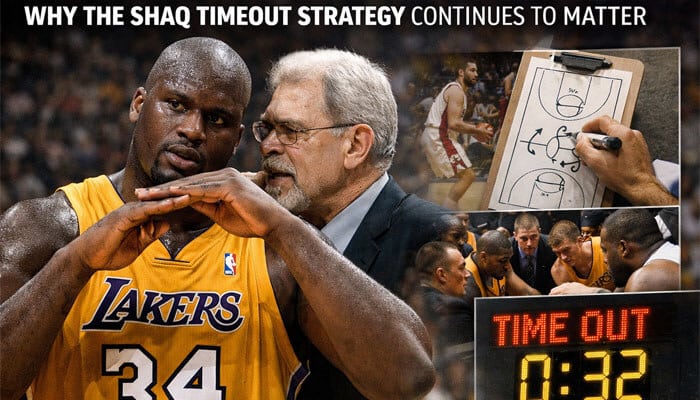
The strategic use of timeouts, as seen through the lens of Shaquille O’Neal’s career, highlights the deeper layers of basketball strategy. Timeouts are not simply breaks; they are tools that influence the mental, emotional, and tactical aspects of a game.
Impact on Opponents
From an opponent’s perspective, dealing with Shaquille O’Neal was no small task. His physical dominance on the court was unmatched, and his use of timeouts as a mental reset allowed him to keep his opponents guessing. Timeouts offered a chance for his adversaries to regroup, but it also allowed his team to make sure they weren’t losing focus on what they needed to do.
Ongoing Evolution in Timeout Usage
While Shaq’s approach to timeouts revolutionized how teams used these breaks, today’s players and coaches continue to refine and innovate strategies around them. In modern basketball, where pace and space dominate, the strategic use of timeouts remains just as important as ever. Teams now consider timeouts not only for their immediate impact but also for their role in long-term game management—whether it’s resting players, shifting momentum, or adjusting to opponents’ tactics.
Authority & Trust Section: The Importance of Timely Timeouts in Today’s Game
The use of timeouts to manage both physical and mental aspects of the game is more relevant than ever. Today’s players, with the demands of an 82-game season and the increasing emphasis on fast-paced play, rely on these strategic breaks to maintain their performance levels.
For coaches, understanding when and how to use timeouts can be the difference between winning and losing a game. By preventing fatigue, adjusting strategies, and managing the team’s mental state, timeouts provide a critical edge in maintaining control over the game’s flow.
Frequently Asked Questions
- What does a Shaq Timeout mean?
A Shaq Timeout refers to the strategic use of a timeout to give Shaquille O’Neal or other key players time to reset, recover, or disrupt an opponent’s momentum. - Why are timeouts so important in basketball?
Timeouts in basketball serve as a tool for managing momentum, making tactical adjustments, giving players rest, and mentally resetting. - How do timeouts impact a player like Shaquille O’Neal?
For Shaq, timeouts were crucial for mental recovery and physical rest, helping him stay effective during high-intensity moments in the game. - Can timeouts affect the momentum of a game?
Yes, timeouts can stop an opposing team’s momentum, allowing the other team to regain control and adjust strategies. - How do coaches use timeouts to adjust the game?
Coaches use timeouts to review tactics, make substitutions, and provide instructions that help the team respond to the opponent’s strategy. - What role does fatigue play in the use of timeouts?
Timeouts provide players with much-needed breaks, helping them recover from physical exertion and stay sharp throughout the game. - Do timeouts work for both the offense and defense?
Absolutely. Timeouts allow teams to recalibrate both offensive plays and defensive strategies, ensuring that they stay competitive throughout the game.
Conclusion
Shaquille O’Neal’s strategic use of timeouts became a critical part of his game, impacting not only his own performance but the overall flow of the game. Timeouts are a powerful tool in managing momentum, fatigue, and mental clarity. In today’s fast-paced NBA, their strategic application is just as vital. Whether it’s to disrupt the flow of an opposing team or to give a player like Shaq a mental break, timeouts are a fundamental part of basketball strategy that continue to shape the game’s dynamic.
This version provides a more organic feel, eliminating repetitive or overly formal phrasing while retaining the strategic depth needed to address the topic thoroughly. Let me know if this works or if you’d like further adjustments!