


Minecraft is one of the world’s most popular sandbox games. Players can build houses, explore new worlds, collect resources, and play with friends. While many people enjoy Minecraft on Windows, Linux is also a useful option for gaming. If you have searched for plugboxlinux minecraft, you may be looking for ways to install Minecraft, improve performance, or run a multiplayer server on a Linux-based system.
Linux gives players more control over their computers. It allows them to manage system resources, change settings, and use different tools to improve their gaming experience. However, setting up Minecraft on Linux can feel confusing for beginners. Choosing the correct Java version, installing the game, managing mods, and fixing technical problems all require some basic knowledge.
This plugboxlinux minecraft guide for 2026 explains the important steps in simple language. You will learn what PlugboxLinux refers to, how Minecraft works on Linux, how to install and configure the game, and how to create a server. We will also cover performance tips, security practices, common errors, and frequently asked questions to help you enjoy Minecraft with fewer problems.
What Is PlugboxLinux Minecraft?
The term plugboxlinux minecraft appears in online searches and gaming guides related to Minecraft and Linux. However, it is important to understand the difference between a Linux operating system, a Minecraft launcher, and a Minecraft server.
Historically, Plugbox Linux was associated with a lightweight, Arch Linux-based distribution designed for certain ARM-based devices. It should not automatically be treated as a modern Minecraft launcher, official gaming platform, or actively maintained Minecraft distribution.
When people search for PlugboxLinux Minecraft, they may be interested in:
- Installing Minecraft Java Edition on Linux
- Running Minecraft on a lightweight operating system
- Creating a private Minecraft multiplayer server
- Improving game performance on Linux hardware
- Installing Minecraft mods and server plugins
- Fixing Java, graphics, and compatibility problems
Important: There is no established evidence that PlugboxLinux is an official Minecraft product or that the historical Plugbox Linux distribution supports modern Minecraft versions. This guide therefore focuses on supported Linux
methods rather than promising a dedicated PlugboxLinux installer.
How Does Minecraft Work on Linux?
Minecraft Java Edition can run on compatible Linux computers. The game uses Java technology and a graphics system to display its 3D world.
When you launch Minecraft, your computer performs several tasks. The processor handles game calculations, the graphics hardware displays blocks and objects, and memory stores information about the world.
Linux manages these resources through its operating system.
A typical setup includes:
1. A compatible Linux distribution
2. Updated graphics drivers
3. A supported Minecraft launcher
4. A valid Minecraft Java Edition license
5. The correct Java runtime for the selected game version
6. Enough memory and storage for the game
The official Minecraft Launcher is available for supported Linux desktop environments. Alternative launchers also exist, but users should download them only from trusted sources.
Minecraft Java Edition vs. Bedrock Edition on Linux
Before installing the game, you should understand the difference between Minecraft’s two main editions.
| Feature | Java Edition | Bedrock Edition |
| Official Linux desktop support | Yes | No native Linux desktop release |
| Java required | Yes | No |
| Mods | Broad Java mod ecosystem | Add-ons and marketplace content |
| Multiplayer | Java-compatible servers | Bedrock-compatible servers |
| Server plugins | Paper, Spigot, and others | Different server ecosystem |
| Cross-play | Primarily Java players | Supported Bedrock platforms |
| Best choice for Linux PCs | Usually recommended | Requires other supported platforms or unofficial approaches |
For most Linux desktop users, Minecraft Java Edition is the easiest and most practical choice.
Can You Run Minecraft on PlugboxLinux in 2026?
This question needs a careful answer.
The original Plugbox Linux was designed for a different generation of hardware and software. Modern Minecraft Java Edition has much higher hardware and software requirements.
Older ARM devices may face several problems:
- Unsupported processor architecture
- Insufficient RAM
- Missing graphics capabilities
- Outdated system libraries
- Incompatible Java versions
- No actively maintained software packages
Because of these limits, installing modern Minecraft directly on an old Plugbox Linux system may not be practical.
A better approach is to use a maintained Linux distribution that supports your device.
Recommended Linux Options for Minecraft
| Linux distribution | Main advantage | Suitable for |
| Ubuntu | Extensive documentation and software support | Beginners |
| Linux Mint | Familiar desktop interface | New Linux users |
| Fedora | Modern packages and desktop features | Intermediate users |
| Debian | Stable software environment | Desktop gaming and servers |
| Arch Linux | Flexible configuration | Experienced users |
| Raspberry Pi OS | Designed for supported Raspberry Pi hardware | Lightweight projects and compatible server setups |
The best distribution depends on your hardware. A modern Linux system does not automatically make an old computer powerful enough to run Minecraft smoothly.
Minecraft System Requirements for Linux in 2026
Before installing Minecraft, check whether your computer can handle the game.
Mojang updated its Java Edition hardware guidance in July 2026. The newer requirements reflect larger game worlds, modern graphics, and the planned move toward Vulkan rendering.
Minecraft
| Component | Minimum target | Recommended target |
| Operating system | Compatible 64-bit system | Updated 64-bit Linux |
| RAM | 8 GB with dedicated GPU; 12 GB with integrated graphics | 16 GB |
| Processor | 4-core CPU | Stronger modern CPU |
| Graphics | Vulkan 1.3-capable GPU with 2 GB VRAM | Capable GPU with 6 GB VRAM |
| Performance target | 1080p, 30 FPS, Fast settings | 1080p, 60 FPS, Fancy settings |
| Storage | Space for launcher, game, and worlds | SSD with additional free space |
These are current performance targets, not a guarantee that every older Minecraft version will stop working on weaker hardware.
An SSD can reduce loading delays. A stable internet connection is also useful for downloading updates and playing online.
How to Install Plugboxlinux Minecraft on Linux: Step-by-Step Guide
If your goal is to play Minecraft on Linux, the safest option is to use a current Linux distribution and the official Minecraft launcher.
Step 1: Check Your Linux System
Open the terminal. A terminal is a tool that allows you to control your computer by typing commands.
Enter:
uname -m
This command shows your computer’s processor architecture.
Common results include:
- x86_64: A 64-bit Intel or AMD system
- aarch64: A 64-bit ARM system
- armv7l: An older 32-bit ARM system
Most standard Linux desktop installation guides assume an x86-64 computer. ARM devices need extra compatibility checks because the official launcher and game components may not support every ARM configuration.
Next, check your memory:
free -h
This displays your total and available RAM.
You can also check your Linux distribution:
cat /etc/os-release
These commands help you identify your hardware before downloading software.
Step 2: Update Your Linux Computer
Keeping your operating system updated helps reduce software problems and security risks.
On Ubuntu, Debian, or compatible systems, enter:
sudo apt update
sudo apt upgrade
On Fedora, use:
sudo dnf upgrade
On Arch Linux, use:
sudo pacman -Syu
These commands update installed software through the distribution’s package manager.
Restart your computer if the update includes important system or graphics components.
Step 3: Download the Official Minecraft Launcher
Visit the official Minecraft download page.
Choose the Linux download that matches your operating system and processor architecture.
For example:
- Ubuntu and Debian users can look for the supported Debian package
- Other Linux users should check the available official Linux installation options
- ARM users should verify support before downloading
Avoid websites that advertise unofficial PlugboxLinux Minecraft installers without explaining their source or maintenance.
Unknown installers can contain unwanted software or put your Minecraft account at risk.
Step 4: Install the Launcher
If you downloaded a compatible .deb package on Ubuntu or Debian, open the terminal in the folder containing the file.
You can install it with:
sudo apt install ./minecraft-launcher.deb
This example assumes the downloaded file is named minecraft-launcher.deb. Replace the filename if necessary.
The package manager will attempt to install the launcher and its required dependencies.
After installation, open Minecraft Launcher from your applications menu.
Step 5: Sign In to Your Minecraft Account
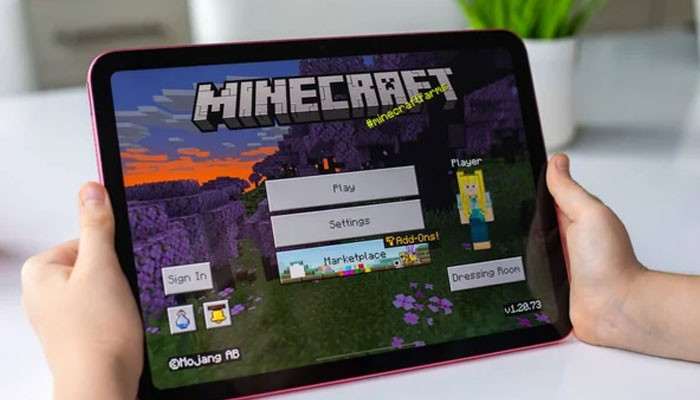
Open the launcher and sign in using the Microsoft account associated with your Minecraft purchase.
After signing in:
1. Select Minecraft Java Edition
2. Choose a game version
3. Allow the launcher to download the required files
4. Click Play
5. Wait for Minecraft to open
The first launch may take longer because the launcher must download game files.
Step 6: Create Your First Minecraft World
Once Minecraft opens, choose Singleplayer and create a new world.
You can select different game modes.
| Game mode | What it offers |
| Survival | Collect resources, craft tools, and survive |
| Creative | Build freely with unlimited resources |
| Hardcore | A more difficult survival challenge with permanent death |
| Adventure | Play custom maps with special rules |
| Spectator | Explore without normal interaction |
For beginners, Survival and Creative are good starting points.
If your computer struggles, lower the graphics settings before exploring a large world.
How to Install Java for Minecraft on Linux
Java is one of the most important parts of Minecraft Java Edition.
The official launcher normally manages the Java runtime needed for supported game versions. However, manually installed servers and some third-party launchers may require you to install Java yourself.
Check Your Installed Java Version
Open the terminal and enter:
java -version
The output will show your installed Java version.
If Java is missing, your terminal may display a command-not-found message.
Install Java on Ubuntu or Debian
For Minecraft releases that require Java 21, you can install OpenJDK 21 on a distribution that provides the package:
sudo apt update
sudo apt install openjdk-21-jre-headless
The headless runtime is suitable for servers because it does not include desktop graphical components.
For desktop applications that need a full Java environment, a non-headless runtime may be appropriate.
Important: Java requirements depend on the Minecraft version. Some older releases need older Java versions, while newer releases may require a different runtime. Always check the requirements for the exact game or server release you are installing.
Do not assume that Java 21 supports every Minecraft version released in 2026.
How to Create a Plugboxlinux Minecraft Server
A Minecraft server allows multiple people to join the same world.
You can build together, explore caves, fight enemies, or create a private community.
Linux is a popular choice for self-hosted servers because it provides flexible tools for managing software and network settings.
The following example explains how to set up an official Minecraft Java Edition server on a compatible Linux computer.
Step 1: Create a Server Folder
Open the terminal and enter:
mkdir -p ~/minecraft-server
cd ~/minecraft-server
This creates a folder where your Minecraft server files will be stored.
Keeping server files in one location makes backups and maintenance easier.
Step 2: Download the Official Server File
Visit the Minecraft Java Edition server download page.
Download the server JAR file for your selected release.
Place it inside your minecraft-server folder and rename it to:
server.jar
The official server software is free to download, although players still need the appropriate game access to join.
Minecraft
Step 3: Start the Server
Run this command:
java -Xms2G -Xmx4G -jar server.jar nogui
Here is what each part means:
- java: Starts the Java runtime
- -Xms2G: Sets the initial Java heap size to 2 GB
- -Xmx4G: Limits the maximum Java heap to 4 GB
- -jar server.jar: Runs the Minecraft server file
- nogui: Starts the server without a graphical interface
These memory settings are examples for a small server, not universal requirements. Choose values that fit your hardware and player count, and leave enough memory for Linux itself.
The first attempt may stop after generating configuration files. This is normal.
Step 4: Accept the Minecraft EULA
Open the newly created eula.txt file.
Read the Minecraft End User License Agreement.
If you agree, change:
eula=false
to:
eula=true
Save the file.
Restart the server using the same Java command.
Step 5: Configure Server Settings
The server.properties file controls important server options.
Common settings include:
| Setting | Purpose | Example |
| server-port | Sets the connection port | 25565 |
| max-players | Limits player count | 10 |
| difficulty | Controls game difficulty | normal |
| gamemode | Sets the default game mode | survival |
| white-list | Restricts access to approved players | true |
| online-mode | Enables account authentication | true |
| view-distance | Controls chunk visibility from the server | 8 |
| simulation-distance | Controls active simulation distance | 6 |
For a private server, enable the whitelist and keep account authentication turned on.
Add trusted players through the server console, using commands such as:
whitelist on
whitelist add PlayerName
Replace PlayerName with the actual Minecraft username.
Step 6: Connect to Your Server
Open Minecraft Java Edition.
Select Multiplayer, then Add Server.
For a server running on the same computer, enter:
localhost
For another computer on your home network, use the server’s local IP address.
Friends outside your home network may need your public address and properly configured router and firewall rules.
Do not share private account information or router administration credentials with other players.
How to Improve Plugboxlinux Minecraft Performance
Minecraft performance depends on your hardware, graphics settings, installed mods, and world size.
Even a powerful computer may experience lag when the game loads too many chunks or runs demanding shaders.
Here are practical ways to improve performance.
1. Reduce Render Distance
Render distance controls how far you can see into the Minecraft world.
A higher setting displays more terrain but requires more processing power.
For weaker computers, start with a render distance of 6–10 chunks and adjust it based on performance.
2. Lower Graphics Settings
Open Minecraft’s Video Settings.
Try these changes:
- Select Fast graphics
- Reduce particle effects
- Lower cloud quality or disable clouds
- Reduce entity distance
- Disable demanding shaders
- Lower the render distance
Test one setting at a time so you can identify what actually helps.
3. Install Compatible Performance Mods
Minecraft Java Edition supports community-made mods that can improve rendering and memory usage.
Popular examples include:
- Sodium: A rendering optimization mod that can improve frame rates on supported Minecraft versions
- Lithium: Optimizes parts of the game’s logic and may improve performance
- FerriteCore: Reduces memory usage in certain situations
- ImmediatelyFast: Improves the performance of selected rendering operations
Download mods from trusted project pages, such as Modrinth, and confirm compatibility with your game version and mod loader.
Performance improvements vary by computer. Installing more mods does not always make Minecraft faster.
4. Allocate a Reasonable Amount of RAM
Minecraft needs enough memory to load its world and resources.
However, assigning too much memory can create other problems.
For example, on a computer with 16 GB RAM, a starting allocation of around 4 GB may be reasonable for ordinary Java Edition gameplay, depending on the version and installed mods.
Large modpacks may require more.
Avoid allocating nearly all your system memory to Minecraft because Linux and background applications also need RAM.
5. Update Graphics Drivers
Graphics drivers allow Linux to communicate with your graphics hardware.
Outdated drivers can cause:
- Low frame rates
- Screen flickering
- Missing textures
- Game crashes
- Graphics compatibility errors
Use your Linux distribution’s supported driver tools and repositories.
For NVIDIA hardware, check the recommended proprietary driver where appropriate. AMD and Intel users commonly rely on supported Linux graphics drivers and Mesa components.
Because Minecraft is evolving toward Vulkan, checking Vulkan compatibility is increasingly important.
6. Use an SSD
Minecraft frequently loads and saves world data.
An SSD can reduce some storage-related delays, especially when opening worlds or loading large files.
However, an SSD will not fix problems caused by a weak processor or unsupported graphics hardware.
Minecraft Mods vs. Plugins: What Is the Difference?
Mods and plugins are often confused, but they serve different purposes.
Mods can change Minecraft’s gameplay, graphics, items, and mechanics. Plugins mainly add features to compatible multiplayer server software.
| Feature | Mods | Plugins |
| Main purpose | Change or extend game features | Add server functionality |
| Common platforms | Fabric, NeoForge, Forge | Paper, Spigot |
| Client installation | Sometimes required | Often not required |
| New blocks and items | Commonly possible | More limited without client support |
| Typical use | New gameplay and optimization | Permissions, commands, moderation |
Popular Minecraft Server Plugins
Server owners often use plugins for administration and community management.
Examples include:
- EssentialsX for common server commands
- LuckPerms for player permissions
- WorldEdit for editing large areas
- CoreProtect for logging and reversing certain world changes
- ViaVersion for selected protocol compatibility across client versions
These tools require compatible server software.
The official vanilla server does not directly support Paper or Spigot plugins.
Before installing a plugin, check its supported server version and read its documentation.
Is Plugboxlinux Minecraft Safe?
Minecraft on Linux can be safe when you use supported software and follow basic security practices.
The main risks usually come from untrusted downloads, outdated packages, weak server settings, or unsafe account practices.
Important Security Tips
1. Use official downloads: Get Minecraft from Minecraft.net and use trusted Linux repositories.
2. Avoid cracked launchers: Unofficial software can create malware and account-security risks.
3. Keep authentication enabled: Do not disable online-mode merely to allow unverified users.
4. Update server software: Security fixes and compatibility improvements matter.
5. Back up your worlds: Keep copies before changing versions or installing mods.
6. Restrict server access: Use whitelists and firewall rules.
7. Avoid running servers as root: Use a regular, dedicated Linux account.
8. Protect your Microsoft account: Use strong authentication and never share sign-in codes.
If you are working with an old Plugbox Linux device, do not expose it directly to the internet. Legacy operating systems may no longer receive important security updates.
Common Plugboxlinux Minecraft Problems and How to Fix Them
Even after a successful installation, Minecraft may sometimes crash, freeze, or refuse to start.
Most problems involve Java compatibility, graphics drivers, insufficient memory, or incorrect server settings.
1. Minecraft Launcher Does Not Open
Possible causes:
- Missing software dependencies
- Unsupported processor architecture
- Damaged installation files
- Outdated Linux packages
Solutions:
Update your Linux system, verify that you downloaded the correct launcher package, and reinstall it from the official website if necessary.
2. Minecraft Shows a Java Error
You may see an error such as:
UnsupportedClassVersionError
This often means the program was compiled for a newer Java version than the one currently running.
Check your installed version:
java -version
Install the Java version required by your selected Minecraft release. If you have multiple Java versions installed, make sure the server uses the correct one.
3. Minecraft Runs Slowly
Low FPS can make Minecraft difficult to play.
Try these fixes:
- Reduce render distance.
- Close unnecessary background applications.
- Disable shaders.
- Update graphics drivers.
- Test compatible optimization mods.
- Check whether your computer meets the current hardware requirements.
Remember that FPS problems and multiplayer network lag are different issues. Graphics settings may improve FPS but will not repair an unstable internet connection.
4. Cannot Connect to a Minecraft Server
A connection error may occur when the server is offline, the address is incorrect, or the network blocks the connection.
Check the following:
- Confirm the server is running
- Verify the server address and port
- Check the Minecraft version and any required mods
- Review firewall and router settings
- Confirm that your username is on the whitelist if one is enabled
Java Edition commonly uses TCP port 25565 for multiplayer servers. Only open the ports you actually need.
5. Minecraft Server Keeps Crashing
A server may crash because of insufficient memory, incompatible plugins, corrupted files, or unsupported Java versions.
Read the server’s console output and crash reports to identify the problem.
Before removing plugins or modifying world files, create a backup.
How to Back Up Minecraft Worlds on Linux
World backups protect your buildings, items, and progress.
On a typical Linux desktop installation, Minecraft Java Edition stores its game data in:
~/.minecraft/
Singleplayer worlds are commonly stored in:
~/.minecraft/saves/
A dedicated server usually stores its world folders inside the server directory unless configured otherwise.
Create a Backup
Close Minecraft before copying a singleplayer world. For a dedicated server, stop it safely or use a backup method designed to preserve data consistency.
Then copy the relevant world folder to another location.
For example:
cp -a ~/.minecraft/saves ~/minecraft-world-backup
This copies your singleplayer saves to a separate folder in your home directory.
For better protection, keep another backup on an external drive or trusted cloud storage service.
Always back up your world before upgrading Minecraft, changing server software, or installing major mods.
Plugboxlinux Minecraft: Advantages and Limitations
Linux offers several benefits for Minecraft players, but it also has limitations.
| Advantages | Limitations |
| Flexible system configuration | Some setup tasks require terminal commands |
| Wide choice of Linux distributions | Hardware compatibility varies |
| Strong Java Edition modding community | Some mods require extra configuration |
| Useful tools for dedicated servers | Server administration requires maintenance |
| Free, open-source operating systems | Minecraft itself requires a valid license |
| Lightweight desktop options | Older hardware may not meet current requirements |
For beginners, Ubuntu or Linux Mint can offer a more straightforward starting point than an outdated Plugbox Linux installation.
Experienced users may prefer Debian, Fedora, or Arch Linux because they provide different approaches to software management and system configuration.
Best Practices for Minecraft on Linux in 2026
If you want a stable Minecraft experience, focus on reliability instead of making too many changes at once.
Use a maintained Linux distribution, install the correct game version, and keep your graphics drivers updated.
For multiplayer servers, prioritize security, backups, and stable performance. Avoid installing dozens of plugins without testing their effects.
A good routine includes:
- Checking game and mod compatibility before updating.
- Backing up worlds regularly.
- Monitoring memory and CPU usage.
- Using trusted software sources.
- Testing major changes on a separate world.
- Keeping server access limited to approved players when privacy matters.
These habits can prevent many common problems and save hours of troubleshooting.
Conclusion
Plugboxlinux minecraft is an interesting topic for players who want to understand how Minecraft works with Linux and lightweight computing systems. Although the original Plugbox Linux project belongs to an older generation of ARM hardware, modern Linux distributions provide practical ways to enjoy Minecraft Java Edition.
For most players, the best approach is to choose a maintained Linux operating system, download the official Minecraft launcher, and check hardware compatibility before playing. Server owners should also pay attention to Java requirements, memory allocation, backups, and network security.
Whether you want to build your first survival world, improve gaming performance, or create a private multiplayer server, understanding these basics will help you make better decisions. With the right hardware and configuration, Minecraft on Linux can provide a flexible and enjoyable gaming experience in 2026.
Plugboxlinux Minecraft FAQs
1. What is Plugboxlinux Minecraft?
Plugboxlinux Minecraft is a search phrase associated with Minecraft and Linux-based systems. The historical Plugbox Linux project was an ARM-focused operating system, not an official Minecraft edition or launcher.
2. Can I play Minecraft on Linux for free?
Linux distributions are generally free to use, but Minecraft Java Edition normally requires a valid purchase. Minecraft may also provide limited demo access through official channels.
3. Does Minecraft Java Edition work on Ubuntu?
Yes. Minecraft Java Edition supports compatible Linux desktop systems, including Ubuntu configurations that meet its software and hardware requirements.
4. Can I run Minecraft on an old Plugbox Linux computer?
Modern Minecraft is unlikely to run well on original Plugbox-era hardware because of limited RAM, older processors, and graphics compatibility issues. A modern supported computer is the better choice.
5. How much RAM do I need for a Minecraft server?
A small, lightly used server may work with a few gigabytes of allocated Java heap memory. Larger worlds, additional players, and modded servers often need more. The correct amount depends on the workload.
6. Can I install Minecraft mods on Linux?
Yes. Minecraft Java Edition supports many mods on Linux. You must choose the correct Minecraft version, mod loader, and compatible mod files.
7. Is Linux better than Windows for Minecraft?
Neither operating system is automatically faster. Performance depends on hardware, graphics drivers, Java settings, and game configuration. Linux offers more system customization, while Windows may be easier for players already familiar with it.
8. Can Java Edition players join Bedrock servers?
Not directly through the standard editions. Some community server tools, such as Geyser, can provide cross-edition connectivity when configured correctly, but compatibility and feature limitations may apply.
9. What is the best Linux distribution for Minecraft beginners?
Ubuntu and Linux Mint are practical choices because they offer familiar desktop environments, accessible software management, and extensive community documentation.
10. Is PlugboxLinux an official Minecraft platform?
No. Plugbox Linux was a historical Linux distribution associated with ARM-based plug computers. It should not be confused with an official Minecraft product.