


Have you ever stood in a garden full of dried leaves and wished something could just blow them all away in seconds? That’s exactly what the blowers are made for. Whether you’re a homeowner, a professional landscaper, or someone who just wants to keep things clean and tidy, the blowers have become one of the most useful tools in the modern world.
The blowers are not just about leaves. Over the years, they have grown into powerful machines used in homes, factories, farms, HVAC systems, and even industrial plants. From a simple handheld leaf blower in your backyard to a giant industrial centrifugal blower pushing air through massive ducts, the blowers come in all shapes, sizes, and purposes. Understanding them better helps you pick the right one, use it safely, and get the most out of your money.
In this complete guide, we’re going to break down everything about the blowers: what they are, how they work, the different types, where they’re used, what to look for when buying one, and how to take care of them. If you’ve ever been confused about the blowers or just want to know more, you’re in the right place. Let’s dive in.
What Are The Blowers?
The blowers are machines or devices designed to move large volumes of air or gas from one place to another. They work by using a motor and a fan or impeller to push or pull air at a controlled speed and pressure.
Simply put, the blowers take in air from one end and push it out from the other fast, steady, and powerful.
They are different from fans (which just circulate air in a room) and compressors (which squeeze air into very high pressure). The blowers sit right in the middle – they move much more air than a fan, but at lower pressure than a compressor.
How Do The Blowers Work?
Understanding how the blowers work is actually pretty simple once you break it down.
Here’s the basic process:
- Air Intake: The blower pulls in air through an inlet (an opening or vent).
- Spinning Impeller or Fan: Inside the blower, a fast-spinning component (called an impeller or rotor) catches the air and throws it outward using centrifugal force or pushes it forward using axial force.
- Pressurization: As the air moves through the blower, it gets slightly pressurized, not as much as a compressor, but enough to create strong airflow.
- Air Outlet: Pressurized air exits through an outlet or nozzle and reaches where it’s needed.
The motor (electric, gas, or battery-powered) drives the spinning component and controls how fast and powerful the airflow is.
Types of The Blowers
This is one of the most important sections because the blowers come in many different types, and each type is made for a specific job.
1. Centrifugal Blowers
These are the most common types of the blowers used in industrial and commercial settings.
- Air enters through the center of the spinning impeller.
- Centrifugal force throws the air outward to the edges.
- The air exits at a 90-degree angle from where it came in.
- Great for moving large volumes of air at moderate pressure.
Used in: HVAC systems, factories, dust collection, ventilation, and air pollution control.
2. Axial Blowers
In axial blowers, air moves in a straight line – entering and exiting in the same direction (like a propeller on a plane).
- Simpler design, lightweight, and efficient for high-volume airflow.
- Lower pressure than centrifugal blowers.
Used in: Cooling electronics, ventilation tunnels, air conditioning units, and industrial fans.
3. Positive Displacement Blowers
These are unique because they trap a fixed amount of air and push it through the outlet with every rotation.
- Very consistent airflow.
- Used when exact air volume control is needed.
Used in: Wastewater treatment plants, pneumatic conveying systems, and gas boosting.
4. Leaf Blowers (Outdoor/Garden Blowers)
These are the blowers most people are familiar with at home.
- Designed to blow leaves, grass clippings, dirt, and debris.
- Come in handheld, backpack, and wheeled varieties.
- Powered by gas, electricity, or a battery.
Used in: Gardens, driveways, parks, and sports fields.
5. High-Pressure Blowers (Ring Blowers / Regenerative Blowers)
These deliver very high-pressure airflow in a compact size.
- Use a regenerative design to boost pressure without multiple stages.
- Very quiet and reliable.
Used in: Fish ponds (aeration), vacuum systems, laser cooling, and medical equipment.
Quick Comparison Table: Types of The Blowers
| Type of Blower | Airflow Volume | Pressure Level | Common Use |
|---|---|---|---|
| Centrifugal Blower | High | Medium | HVAC, Industrial Ventilation |
| Axial Blower | Very High | Low | Cooling, Air Conditioning |
| Positive Displacement Blower | Medium | High | Wastewater, Pneumatic Conveying |
| Leaf Blower | Low-Medium | Low | Garden, Outdoor Cleaning |
| Ring/Regenerative Blower | Medium | Very High | Aeration, Medical, Laser |
Where Are The Blowers Used?
The blowers are used almost everywhere in modern life. Here’s a breakdown by category:
At Home and in the Garden
- Clearing leaves and debris from lawns, driveways, and patios
- Drying surfaces after rain or washing
- Blowing dust and dirt away from garages and workshops
In Industry and Manufacturing
- Ventilating factories and warehouses
- Moving dust and particles to collection systems
- Cooling machines and electronic equipment
- Transporting powders and granules through pipes (pneumatic conveying)
In HVAC and Building Systems
- Pushing heated or cooled air through ductwork
- Maintaining fresh air circulation in offices and hospitals
- Controlling air pressure in cleanrooms
In Agriculture and Farming
- Drying grain after harvesting
- Ventilating animal barns and greenhouses
- Spraying pesticides and fertilizers with air-assisted equipment
In Wastewater Treatment
- Providing oxygen to biological treatment tanks (aeration)
- Moving air through filter systems
In Medical and Scientific Equipment
- Powering respirators and CPAP machines
- Cooling MRI machines and lab equipment
- Providing airflow in dental drills
Leaf Blowers – A Closer Look at The Blowers for Homes
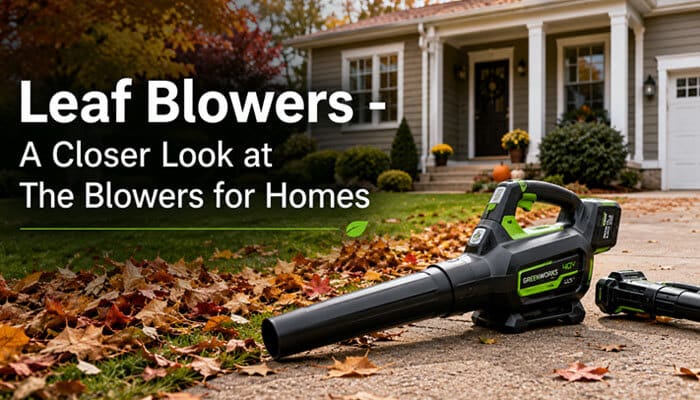
Since most people reading this are looking for the blowers for home or garden use, let’s look at leaf blowers in detail.
Types of Leaf Blowers
1. Handheld Blowers
- Light and easy to carry
- Good for small yards and quick cleanup jobs
- Best for light debris
2. Backpack Blowers
- Worn like a backpack – the engine sits on your back
- Much more powerful than handheld models
- Great for large yards, professional landscapers
- Less tiring for long jobs
3. Walk-Behind (Wheeled) Blowers
- The most powerful leaf blowers available
- You push them like a lawnmower
- Best for very large areas, parks, sports fields, commercial properties
Gas vs. Electric vs. Battery Blowers
| Feature | Gas Blower | Electric Blower | Battery Blower |
|---|---|---|---|
| Power | Highest | Medium | Medium-High |
| Noise Level | Loud | Quiet | Quiet |
| Cord | No | Yes (corded) | No |
| Maintenance | High | Low | Low |
| Environment | More emissions | Clean | Clean |
| Best For | Large areas, pro use | Small yards near outlet | Medium yards, convenience |
Key Specs to Understand When Buying The Blowers
When shopping for the blowers, you’ll see a lot of numbers and specs. Here’s what they actually mean:
- CFM (Cubic Feet per Minute): How much air the blower moves. Higher CFM = more debris moved at once.
- MPH (Miles per Hour): How fast the air comes out. Higher MPH = better at moving heavy, wet leaves.
- CC (Cubic Centimeters): Engine size (for gas blowers). Bigger engine = more power.
- Volts (V): Battery voltage (for cordless blowers). Higher volts = longer runtime and more power.
- Noise Level (dB): How loud the blower is. Under 65 dB is considered quiet; over 75 dB may need ear protection.
What CFM and MPH Combo Do You Need?
| Yard Size | Recommended CFM | Recommended MPH |
|---|---|---|
| Small (under 1/4 acre) | 200–400 CFM | 100–150 MPH |
| Medium (1/4 to 1/2 acre) | 400–500 CFM | 150–180 MPH |
| Large (over 1/2 acre) | 500+ CFM | 180–200+ MPH |
Industrial Blowers – The Heavy-Duty Side of The Blowers
For those dealing with industrial applications, the blowers play a much larger role than just moving leaves.
What Makes Industrial Blowers Different?
- Much larger in size – some are the size of a small room
- Move thousands of cubic feet of air per minute
- Built to run 24/7 without stopping
- Must handle hot air, dirty air, chemicals, or explosive dust
- Require careful engineering and regular maintenance
Common Industrial Blower Applications
- Cement plants: Moving cement powder through pipes
- Power stations: Cooling turbines and pushing combustion air
- Mining: Ventilating underground tunnels
- Chemical plants: Moving corrosive gases safely
- Food processing: Drying and conveying food products
- Paper mills: Moving wet pulp and drying paper
How to Choose The Right Blowers for Your Needs
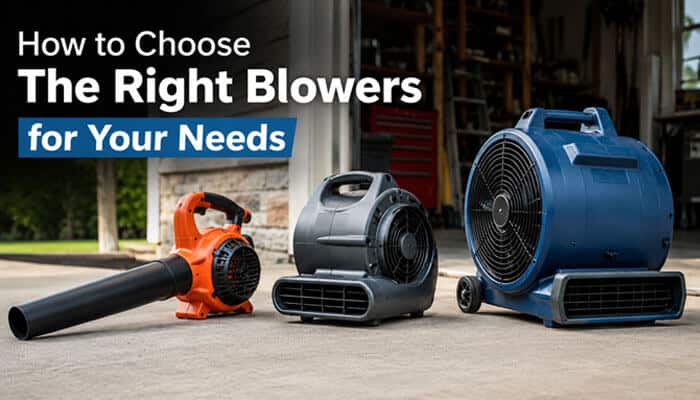
Choosing the right one from the blowers available can feel overwhelming. Here’s a simple checklist:
For Home/Garden Users, Ask Yourself:
- How big is my yard?
- Do I just need to move dry leaves, or also wet, heavy debris?
- Do I want battery convenience or gas power?
- How much noise is acceptable in my neighborhood?
- What is my budget?
For Industrial/Commercial Buyers, Ask Yourself:
- What gas or material needs to be moved (air, dust, chemicals)?
- What volume (CFM) and pressure (PSI or mbar) do I need?
- Will the blower run continuously or intermittently?
- What are the temperature and humidity conditions?
- Does it need to meet any safety certifications (ATEX, CE, UL)?
Top Brands That Make The Blowers
Here are some of the most trusted names in the blowers industry:
For Home & Garden Blowers:
- STIHL: Known for high-quality gas-powered blowers
- Husqvarna: Great for backpack models
- EGO: Best battery-powered option
- DeWalt: Popular with contractors
- Greenworks: Budget-friendly electric options
For Industrial Blowers:
- Gardner Denver: Trusted for centrifugal and positive displacement blowers
- Roots (a division of Howden): Famous for lobe-type PD blowers
- Aerzen: High-efficiency industrial blowers
- Siemens: Industrial ventilation and process blowers
- Spencer Turbine: Regenerative and high-pressure blowers
Maintenance Tips for The Blowers
No matter what kind you have, keeping the blowers well-maintained means they last longer and work better.
For Leaf/Garden Blowers:
- Clean the air filter every 25 hours of use
- Check spark plugs (gas models) every season
- Store battery blowers in a cool, dry place
- Inspect the tube and nozzle for cracks
- For gas models, use fresh fuel and add stabilizer if storing over winter
For Industrial Blowers:
- Lubricate bearings according to manufacturer’s schedule
- Check for vibration unusual vibration often signals worn bearings
- Inspect belts and couplings regularly
- Monitor inlet filters and replace when pressure drop increases
- Check seals to prevent leaks
Safety Tips When Using The Blowers
The blowers are generally safe, but always follow these rules:
- Wear ear protection, especially with gas blowers (they can exceed 90 dB)
- Wear eye protection, debris can fly back at high speed
- Never point the blower at people or animals
- Keep children away from the work area
- Check for rocks or large debris before blowing. They can become dangerous projectiles
- For industrial blowers: Follow lockout/tagout procedures before maintenance
- Never block the inlet or outlet; this overheats the motor
Environmental Impact of The Blowers
This is a big topic in 2026. Gas-powered the blowers have faced increasing criticism and regulations in many cities and states because:
- They produce significant air pollution (VOCs and particulates)
- They are extremely loud, disturbing neighborhoods
- Two-stroke engines can be less efficient than car engines
Many cities in the US (including Los Angeles and Washington DC) have banned or restricted gas-powered leaf blowers.
Eco-Friendly Alternatives:
- Battery-powered blowers: Zero direct emissions, much quieter
- Electric corded blowers: Clean and powerful for small areas
- Rake and compost: The most eco-friendly option for small lawns
The good news? Modern battery blowers in 2026 have caught up with gas in terms of power, making the switch easier than ever.
The Blowers vs. Other Air-Moving Equipment
People often confuse the blowers with similar equipment. Here’s a clear comparison:
| Equipment | Pressure | Volume | Common Use |
|---|---|---|---|
| The Blowers | Medium | High | HVAC, garden, industrial ventilation |
| Fans | Very Low | Very High | Room air circulation |
| Air Compressors | Very High | Low | Powering tools, inflating tires |
| Vacuum Pumps | Negative pressure/suction | Medium | Removing air from containers |
| Turbochargers | Very High | Medium | Engine forced induction |
Frequently Asked Questions About The Blowers
What is the difference between a blower and a fan?
A fan moves air in the same space (recirculates it), while the blowers move air from one place to another with more pressure and direction. Blowers are used when air needs to travel through ducts, pipes, or be directed to a specific spot.
Are the blowers and compressors the same?
No. The blowers operate at lower pressures (usually below 15 PSI) and move higher volumes of air. Compressors work at much higher pressures to store air in tanks.
Can I use a leaf blower as a vacuum?
Many modern leaf blowers have a vacuum mode, where they suck in leaves and shred them. These are called blower-vac or mulching blowers.
How long do the blowers last?
With proper maintenance, the blowers can last 5–10 years for home use and 10–20+ years for well-maintained industrial blowers.
What is the best blower for a large yard?
For large yards, a backpack gas blower or a high-voltage (56V or 80V) battery blower is best. Look for 500+ CFM and 170+ MPH.
Are gas blowers being banned?
In some cities and states, yes. Gas-powered the blowers face increasing restrictions due to noise and emissions. Battery blowers are the recommended alternative.
Conclusion
The blowers are some of the most versatile and widely used machines in the world. Whether you’re pushing leaves off a driveway, ventilating a factory, treating wastewater, or cooling industrial equipment, the blowers are doing the work quietly (or not so quietly!) in the background of modern life.
We’ve covered everything from how the blowers work and the different types available, to how to choose the right one, how to maintain it, and how to stay safe. The key takeaway is this: the blowers are not a one-size-fits-all tool. The right blower depends on your specific needs, your yard size, your industry, your budget, and your environmental values.
As we move further into 2026, battery technology is making the blowers cleaner, quieter, and more powerful than ever. Whether you’re buying your first leaf blower or specifying an industrial centrifugal blower for a plant, understanding the blowers means you’ll always make the right choice.