


In today’s fast‑paced digital world, organizations that can turn vast amounts of data into actionable insights hold a decisive competitive edge. Team Disquantified Org embodies this transformation, a specialized unit designed to help companies leverage data analytics, intelligence systems, and measurable performance frameworks to achieve strategic goals.
Whether you’re a business leader evaluating data‑driven teams or a professional exploring modern organizational structures, this article explains what Team Disquantified Org is, how it functions, and why it matters in a business landscape increasingly shaped by quantification and measurable outcomes.
Introduction
Modern enterprises face a common challenge: overwhelming amounts of data with unclear pathways to value. Traditional teams often struggle to translate analytics into real‑world improvements. Enter Team Disquantified Org, a concept and operational framework focused on stripping away ambiguity, prioritizing measurable insight, and infusing data fluency across organizational workflows.
In this article, we define what Team Disquantified Org means, how it operates in practical settings, and the tangible benefits it delivers. You’ll gain insights into its structure, real‑world applications, and why forward‑thinking businesses are adopting this approach to fuel sustainable growth.
We also explore how Team Disquantified Org fits into broader digital transformation efforts helping both technical and non‑technical stakeholders collaborate more effectively around evidence‑based decisions.
What Is Team Disquantified Org?
At its core, Team Disquantified Org is a multidisciplinary group within an organization dedicated to:
- Translating raw data into actionable business intelligence
- Standardizing measurement frameworks
- Enabling strategic decision‑making through evidence‑based insights
- Reducing ambiguity in performance metrics
Unlike traditional data teams that may focus narrowly on analytics or reporting, Team Disquantified Org prioritizes clarity, alignment with business goals, and measurable impact.
Key Characteristics
- Cross‑Functional Expertise: Brings together analytics, business strategy, domain knowledge, and technology.
- Outcome‑Oriented: Focuses on solving real business problems, not just generating data reports.
- Strategic Integration: Embeds measurement and analysis into core decision processes across departments.
- Adaptable Frameworks: Uses scalable models to evaluate performance, forecast trends, and support innovation.
Why Organizations Need Team Disquantified Org
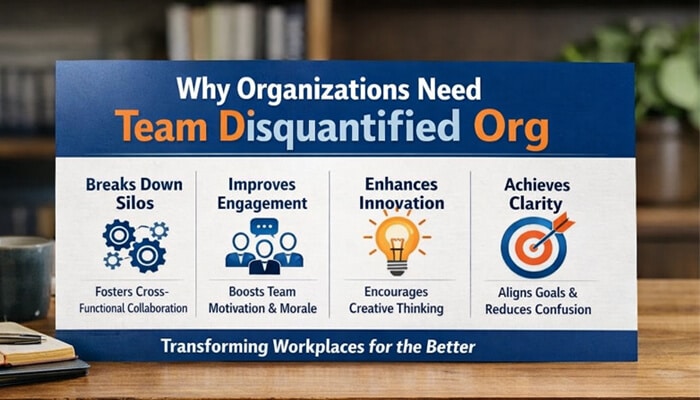
In competitive markets, decisions based on intuition alone can lead to inconsistent outcomes. Organizations that embrace quantification and measurable insights tend to outperform peers in both efficiency and innovation.
Here’s why adopting a Team Disquantified Org model is becoming a strategic priority:
1. Aligning Business Goals with Performance Metrics
Without measurable targets, teams can work hard without clear direction. Team Disquantified Org ensures that objectives are tied to quantifiable outcomes helping teams stay focused on what truly matters.
For example:
- Marketing performance is tied to conversion and retention metrics
- Product development is aligned with user engagement and satisfaction scores
- Operations are measured by efficiency, cost, and quality indicators
2. Reducing Ambiguity in Decision‑Making
By standardizing how data is interpreted and reported, Team Disquantified Org removes guesswork. Instead of debating what data means, stakeholders operate from shared, clearly defined metrics.
This clarity accelerates decisions and boosts organizational confidence.
3. Enabling Rapid Iteration and Innovation
Data without context doesn’t drive progress. Team Disquantified Org fosters a culture where insights are continuously tested, validated, and improved upon enabling faster experimentation and innovation.
Core Functions of Team Disquantified Org
To deliver measurable value, the team focuses on several strategic core functions:
Data Collection and Management
Efficient, accurate data collection is foundational. The team ensures:
- Data integrity and quality
- Unified data sources
- Well‑defined data governance policies
Analytics and Modeling
This phase involves:
- Turning raw data into actionable insight
- Developing statistical or machine learning models
- Predictive and prescriptive analytics for forecasting and optimization
Performance Measurement and Reporting
The team designs dashboards and reporting structures that:
- Surface relevant key performance indicators (KPIs)
- Offer real‑time visibility for decision makers
- Track long‑term trends alongside short‑term results
Cross‑Team Collaboration
Rather than operating in isolation, Team Disquantified Org works with:
- Product teams to improve UX and feature performance
- Sales and marketing to optimize campaigns
- Finance to align investment decisions with projected outcomes
Organizational Structure: How a Team Disquantified Org Is Built
Although organizational structures vary, a typical Team Disquantified Org includes the following roles:
1. Data Strategist
Focuses on aligning analytics with business goals.
- Shapes reporting frameworks
- Prioritizes analytics initiatives
- Communicates insights to leadership
2. Data Engineers
Ensure data is collected, stored, and accessible.
- Manage pipelines and infrastructure
- Ensure data accuracy and consistency
3. Data Analysts and Scientists
Interpret data and build models.
- Perform exploratory analysis
- Create forecasts and insights
- Test hypotheses using rigorous methods
4. Business Analysts
Bridge technical insight with operational needs.
- Translate analytics into business language
- Support cross‑departmental strategy execution
5. Performance Leads
Track and report on KPIs.
- Maintain dashboards and reporting tools
- Identify bottlenecks and performance gaps
Benefits of Implementing a Team Disquantified Org
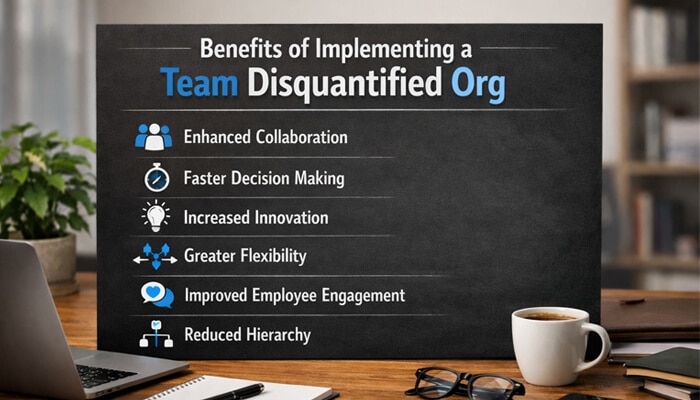
Organizations that adopt this model often report measurable improvements in performance, clarity, and teamwork. Key benefits include:
Improved Decision‑Making
When decisions are backed by validated data rather than assumptions, organizations can:
- Reduce costly errors
- Accelerate strategic initiatives
- Build stakeholder confidence
Enhanced Operational Efficiency
Standardized metrics and reporting help identify inefficiencies and areas for improvement often leading to cost savings and better resource allocation.
Scalable Growth Frameworks
With clearly defined success metrics, organizations can grow sustainably without performance degradation.
Stronger Collaboration Across Functions
Team Disquantified Org fosters shared understanding among otherwise siloed teams driving alignment and accelerating outcomes.
Best Practices for Successful Implementation
Successful integration of Team Disquantified Org involves more than hiring specialists. It requires cultural and operational shifts:
Define Clear Objectives Upfront
Start by clarifying what success looks like and which metrics matter most.
Invest in the Right Tools and Infrastructure
From data platforms to visualization tools, invest in systems that enable real‑time analytics and scale with your needs.
Promote Data Literacy Across the Organization
Training and communication help ensure everyone interprets insights consistently.
Integrate With Decision Workflows
Analytics shouldn’t be an afterthought to integrate insights into core planning, budgeting, and execution processes.
Featured Snippet–Ready Summary
- Team Disquantified Org is a specialized unit focused on turning data into actionable insights tied to organizational goals.
- It combines strategy, analytics, and performance measurement to reduce ambiguity in decision‑making.
- Core roles include data strategists, engineers, analysts, and performance leads.
- Organizations that adopt this approach benefit from improved decisions, clearer metrics, and scalable growth.
- Success depends on clear objectives, the right technology, and a culture committed to measurable outcomes.
Frequently Asked Questions (FAQ)
What is Team Disquantified Org?
Team Disquantified Org refers to a multidisciplinary team that specializes in transforming organizational data into meaningful insights, aligning analytics with business strategy, and supporting measurable decision‑making processes.
Why is Team Disquantified Org important in today’s business environment?
In a data‑driven economy, this team helps businesses make informed decisions, standardize performance metrics, and accelerate innovation by grounding strategies in quantifiable insights.
How does Team Disquantified Org improve decision‑making?
By providing reliable data, clear reporting, and measurable KPIs, the team reduces ambiguity and ensures decisions are informed by evidence rather than intuition.
What roles make up a Team Disquantified Org?
Typical roles include data strategists, data engineers, analysts, business analysts, and performance leads all focused on delivering measurable outcomes.
Can small businesses benefit from a Team Disquantified Org?
Yes. Even smaller organizations can adopt scaled versions of this structure to improve tracking, reporting, and data‑based decision making often starting with key analytics roles or partnerships.
Conclusion
In an era where data is both abundant and essential, organizations that fail to convert information into insight risk falling behind. Team Disquantified Org offers a structured approach to demystifying data and embedding measurable decision‑making into the core of business operations.
By aligning analytics with strategy, fostering cross‑team collaboration, and focusing on outcomes that matter, this model empowers teams to achieve clarity, efficiency, and sustainable growth.